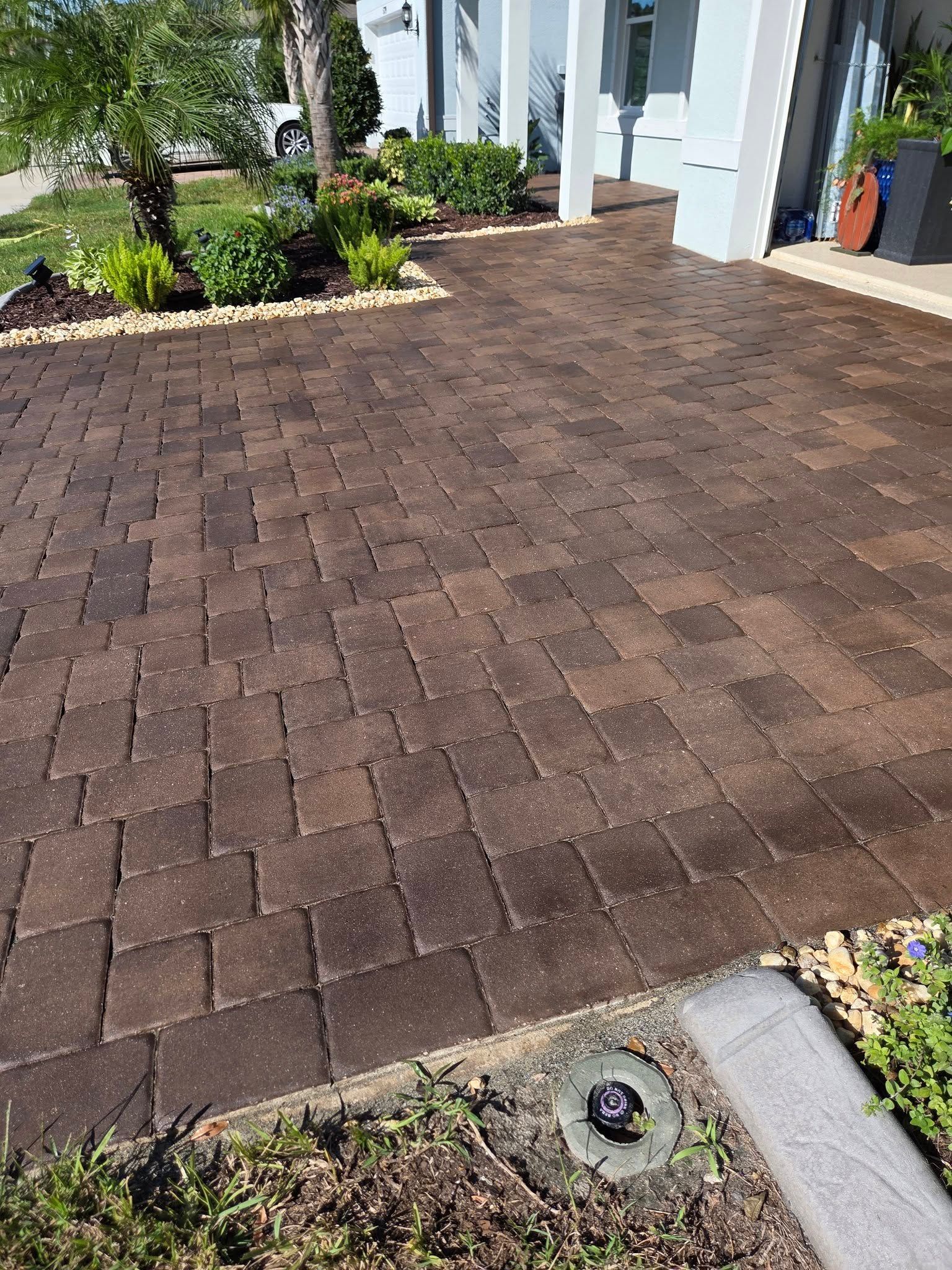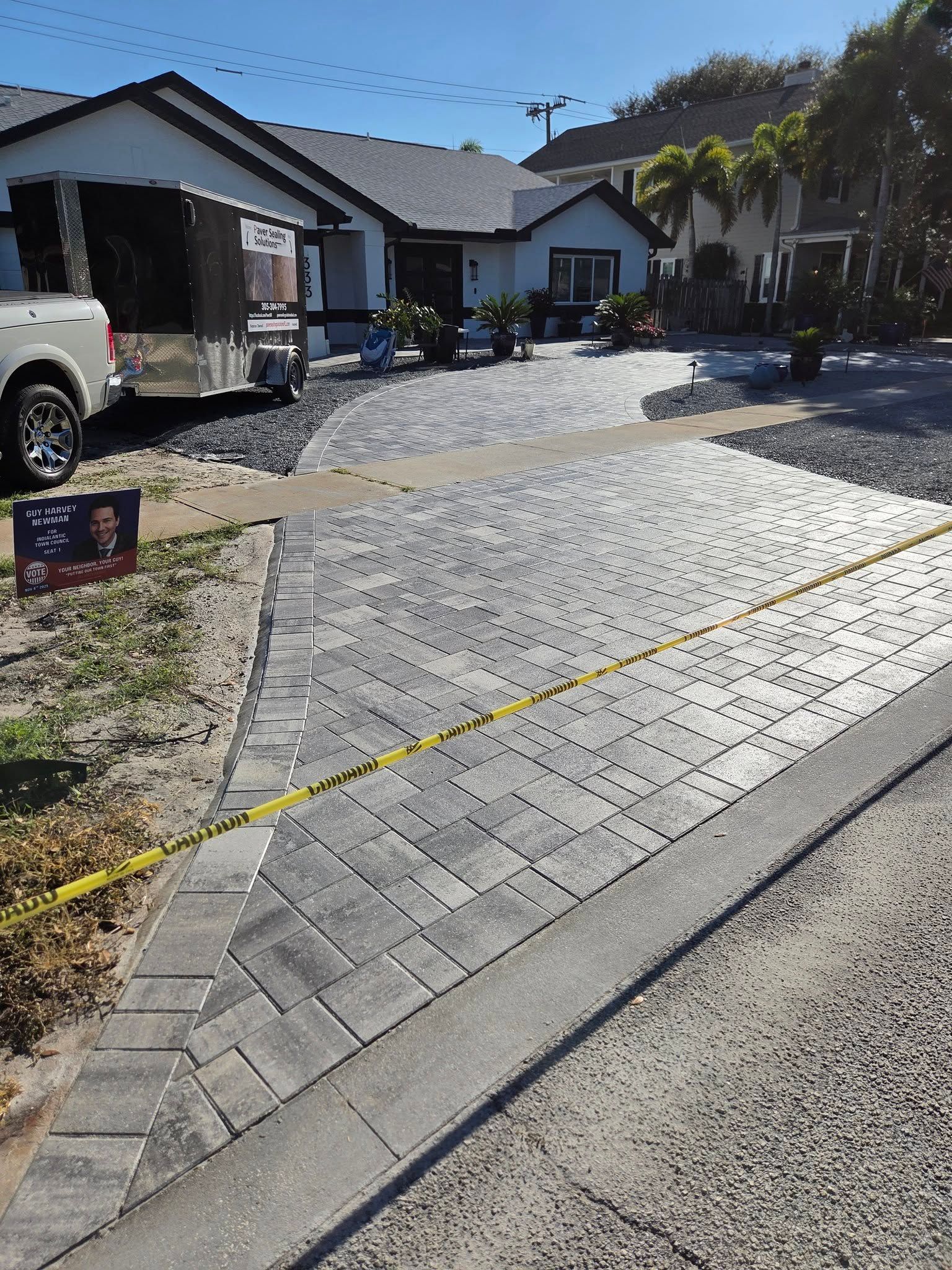
What Is Efflorescence on Pavers? A Florida Homeowner's Guide to Removing White Haze
What Is Efflorescence on Pavers? A Florida Homeowner's Guide to Removing White Haze
You walk outside and notice a strange white or cloudy substance appearing across your pavers.
Maybe it's concentrated around the joints. Maybe your driveway has developed a chalky haze. Or perhaps your relatively new patio or pool deck suddenly looks faded even though the pavers themselves are still in good condition.
What you're seeing may be efflorescence.
Efflorescence is a common issue with concrete pavers, particularly in Florida where moisture is a constant part of the environment. Although the white residue can be frustrating to look at, understanding why it happens is the first step toward addressing it correctly.
At Paver Sealing Solutions, we professionally clean, sand, seal, and restore pavers throughout the Tampa Bay area.
Here's what Florida homeowners should know about efflorescence, why it develops, and what can be done about it.
What Is Efflorescence on Pavers?
Efflorescence is the white, chalky, or hazy residue that can sometimes appear on the surface of concrete pavers and other masonry materials.
It develops when moisture moves through or interacts with the material and carries soluble salts toward the surface.
As the moisture evaporates, those salts can remain behind.
The result is the characteristic white haze homeowners notice on their pavers.
Efflorescence can range from a relatively light film to a much more noticeable white discoloration across portions of a driveway, patio, walkway, or pool deck.
Why Do Florida Pavers Develop Efflorescence?
Florida provides plenty of opportunities for pavers to encounter moisture.
Rain, irrigation, humidity, pool water, and moisture within or beneath the pavers can all contribute to conditions where efflorescence becomes noticeable.
It's also important to understand that efflorescence doesn't necessarily mean something is wrong with the paver itself.
Concrete products contain naturally occurring compounds that can contribute to the formation of soluble salts. When moisture carries those salts toward the surface and subsequently evaporates, the residue becomes visible.
This is why efflorescence can sometimes appear even on relatively new pavers.
What Does Efflorescence Look Like?
Efflorescence is commonly described as:
- White haze
- Chalky residue
- Powdery deposits
- Cloudy patches
- Whitish discoloration
- A faded appearance across the pavers
The exact appearance can vary.
On darker-colored pavers, the contrast can make efflorescence particularly noticeable.
A rich red, brown, charcoal, or darker-toned paver may suddenly appear washed out because of the lighter residue sitting on the surface.
Is Efflorescence the Same as Mold?
No.
A white deposit on your pavers isn't automatically mold or mildew.
Efflorescence is associated with salts deposited as moisture evaporates, while mold, mildew, and algae are biological growth.
That's an important distinction because the appropriate treatment may be different.
If you're unsure what's causing discoloration on your pavers, having the surface professionally evaluated can help determine what you're actually dealing with before attempting to clean it.
Does Efflorescence Mean My Pavers Are Damaged?
Not necessarily.
Efflorescence is often primarily an aesthetic issue.
The appearance can certainly be frustrating, especially after investing in an attractive paver driveway, patio, walkway, or pool deck, but seeing a white haze doesn't automatically mean your pavers are failing.
However, it's still important to understand what's causing the discoloration before applying products or aggressively cleaning the surface.
Does Efflorescence Go Away on Its Own?
Efflorescence may diminish over time as the salts are depleted and exposed to normal weathering, but every situation is different.
The amount of moisture present, age of the pavers, environmental conditions, and severity of the deposits can all influence what happens.
If the appearance is bothering you, professional cleaning may help address the visible deposits rather than simply waiting for weathering to occur.
Can You Pressure Wash Efflorescence Off Pavers?
This is where homeowners should be careful.
It may seem logical to grab a pressure washer and aggressively blast away anything white on the surface.
But more pressure isn't always better when cleaning pavers.
Improper pressure washing techniques can affect joint sand and may potentially damage the surface.
Efflorescence may also require more than water alone depending on its severity.
Professional paver restoration isn't simply about using the strongest pressure possible. It's about using the appropriate cleaning process for the condition of the surface.
Can Efflorescence Be Removed From Pavers?
In many cases, efflorescence can be treated as part of an appropriate paver cleaning and restoration process.
The exact approach depends on the severity of the deposits, the type and condition of the pavers, and other factors.
This is one reason it's beneficial to have the surface inspected rather than randomly applying household cleaners or chemicals.
Using the wrong product or technique can potentially create a bigger problem than the original white haze.
Should Pavers Be Sealed Over Efflorescence?
Pavers should be properly prepared before a sealer is applied.
If visible contaminants or deposits are present, simply covering them with sealer isn't the goal.
Professional paver sealing involves preparation of the surface before the final sealer application.
At Paver Sealing Solutions, our process is built around three important stages:
Clean
- The pavers are professionally cleaned and prepared.
Sand
- Joint sand is installed where appropriate to help stabilize the pavers and refill the joints.
Seal
- A premium sealer is applied to help protect the restored surface and enhance the finished appearance.
Taking the time to prepare the surface properly is an important part of achieving a professional result.
Why Is Paver Cleaning Important Before Sealing?
A sealer is only one part of a paver restoration project.
The condition of the surface before sealing matters.
Depending on the property, pavers may have accumulated:
- Dirt
- Organic growth
- Staining
- Weeds
- Faded areas
- Efflorescence
- Other surface contaminants
Cleaning gives the contractor an opportunity to address the condition of the pavers before moving forward with sanding and sealing.
That's why homeowners considering paver sealing in Tampa Bay should look at the entire restoration process rather than focusing only on the sealer itself.
Can Old or Faded Pavers Be Restored?
Often, yes.
Pavers don't necessarily need to be replaced simply because they've lost some of their original appearance.
Professional cleaning and sealing can make a significant difference to older or faded paver surfaces.
Paver Sealing Solutions works with:
- Driveway pavers
- Pool deck pavers
- Patio pavers
- Walkways
- Commercial paver surfaces
The appropriate restoration process depends on the existing condition of the pavers.
How Often Should Florida Pavers Be Resealed?
Paver Sealing Solutions generally recommends considering resealing approximately every three years.
The actual condition of the surface should still be evaluated because factors such as exposure, traffic, weather, maintenance, and the existing sealer can affect how pavers age.
Regular maintenance can help preserve the appearance of your pavers and prevent them from reaching the point where substantially more restoration work is needed.
Why Paver Maintenance Matters in Florida
Pavers in Florida deal with conditions that are different from those in many other parts of the country.
Strong sunlight, heavy rainfall, irrigation, humidity, pool environments, and year-round outdoor use can all affect hardscapes.
That's especially relevant for driveways and pool decks that receive frequent exposure.
Routine cleaning and periodic professional sealing can help homeowners maintain these surfaces rather than waiting until they look severely weathered.
Frequently Asked Questions About Paver Efflorescence
What causes white haze on concrete pavers?
The white haze may be efflorescence. It occurs when moisture carries soluble salts toward the surface of masonry materials. When the moisture evaporates, the salts can remain behind as a white or chalky deposit.
Is efflorescence permanent?
Not necessarily. Efflorescence can sometimes diminish through natural weathering and may also be addressed through appropriate professional cleaning. The specific situation should be evaluated before treatment.
Is efflorescence harmful to pavers?
Efflorescence is often primarily an appearance issue and doesn't automatically mean your pavers are damaged.
Can I pressure wash efflorescence myself?
Homeowners should be cautious about aggressively pressure washing pavers. Excessive or improper pressure can disturb joint sand and potentially affect the paver surface. Some deposits may also require a more specialized cleaning process.
Should efflorescence be removed before sealing pavers?
Pavers should be properly cleaned and prepared before sealing. If efflorescence is present, it should be evaluated as part of the preparation process rather than simply applying sealer over a visibly contaminated surface.
Why did efflorescence appear on my new pavers?
Efflorescence can occur on newer concrete pavers because moisture can transport naturally occurring soluble salts toward the surface. Its presence doesn't necessarily mean the pavers are defective.
Does Paver Sealing Solutions remove efflorescence?
Paver Sealing Solutions provides professional paver cleaning and restoration. If you're seeing white haze or discoloration, the surface can be evaluated to determine the appropriate cleaning and restoration process.
Professional Paver Cleaning & Sealing in Tampa Bay
If you've noticed white haze or chalky deposits developing across your driveway, patio, walkway, or pool deck, don't assume the pavers need to be replaced.
You may simply be seeing efflorescence.
Paver Sealing Solutions can evaluate the condition of your pavers and recommend an appropriate cleaning, sanding, and sealing process to restore and protect the surface.
With 14 years of experience, we provide professional paver services throughout Lutz, Wesley Chapel, Land O' Lakes, Odessa, Trinity, New Port Richey, Clearwater, St. Petersburg, and surrounding Tampa Bay communities.
Contact us to request an estimate for your property.
📞 305-304-7995
📧 info@paversealingsolutionsfl.com
www.paversealingsolutionsfl.com